



Summary: Plugsters explains why direct burial wire is preferred for long-distance underground cabling. The blog covers protection against soil pressure, rodent damage, and physical stress while maintaining stable signal flow. It highlights installation efficiency, reduced maintenance, and strong structural design for harsh ground conditions. It also shows how direct burial systems support reliable, long-term network performance in demanding environments.
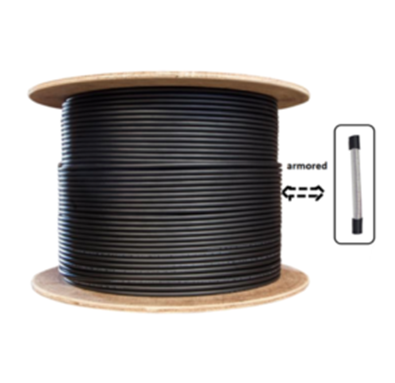
At Plugsters, we work with rodents direct burial wire systems built for direct soil installation without protective duct layers. Rodent-direct burial wire is selected in projects where cables must travel long distances underground with no easy access after installation. The main requirement in these setups is stability under pressure, since soil conditions change constantly due to load, moisture, and movement. This type of cabling removes extra dependency on external conduits and focuses on internal cable strength instead. These systems are often used in large-scale infrastructure where downtime is not acceptable, and cable replacement is difficult once installed. Plugsters focuses on ensuring each cable run remains stable for long operational cycles without frequent intervention or repair requirements.
Why standard buried cables fail in real field conditions
Most underground failures do not come from signal issues but from physical stress. Soil compression, stone contact, and uneven ground movement slowly damage weaker cable jackets. In long routes, even a small weak section can lead to full link failure. Plugsters designs focus on eliminating these weak points by using rodsents direct burial wire with reinforced layering that holds the structure under pressure instead of collapsing or deforming over time. In real deployments, small design flaws can multiply across kilometers of cable length, which makes material strength a key factor. Our approach ensures that stress is distributed evenly along the cable body, reducing the chance of sudden breakdowns during long-term usage.
Rodent resistance as a critical design requirement
Underground routes often pass through areas where rodents are active. These animals can damage standard insulation quickly, leading to sudden outages. Rodent’s direct burial wire is structured with tougher outer protection that makes penetration difficult. At Plugsters, this resistance is not treated as an extra feature but as a core requirement. The cable surface is engineered to reduce bite impact and slow down wear caused by repeated contact, which helps maintain uninterrupted transmission in exposed soil environments. This is especially important in rural and semi-industrial areas where cable exposure cannot be controlled, and protection layers must handle repeated physical interaction without losing performance stability.
Signal stability across extended distances.
Long-distance cabling introduces natural signal weakening. Underground placement adds further stress due to inconsistent environmental pressure. Plugsters focus on maintaining internal conductor alignment so that signal flow remains steady across extended routes. Rodents’ direct burial wire supports this by reducing physical disturbances that typically distort transmission. This allows networks to maintain clearer communication paths even across large geographic spans such as industrial fields, pipelines, and remote monitoring lines. Stable signal behavior is essential in systems where even small delays or losses can affect monitoring accuracy and operational response times.
Why installation efficiency matters in buried systems
Once a buried cable is installed, corrections become expensive and time-consuming. Excavation, repair, and reinstallation can disrupt entire operations. Plugsters reduces this risk by using rodents’ direct burial wire that is built for direct placement with minimal post-installation intervention. The design reduces dependency on external protection layers, which simplifies installation planning and lowers the chance of routing errors during deployment. This also helps installation teams complete projects faster while maintaining structured layouts that are easier to document and manage later during system expansion or maintenance.
Structural durability under soil pressure variations
Soil conditions are never uniform. Some areas apply constant pressure, while others shift due to moisture or load changes. This uneven stress affects cable performance over time. Plugsters engineers cable to maintain structural balance under these variations. Rodent direct burial wire includes reinforced outer layers that distribute pressure more evenly, preventing localized damage points that often lead to hidden failures in underground systems. Over time, this balanced structure helps maintain consistent performance even in unstable ground conditions where traditional cables would normally degrade faster.
Why industries are shifting toward direct burial models
Many industries are moving away from conduit-based systems because they require more space, cost, and maintenance planning. Rodents’ direct burial wire supports a simpler deployment model where the cable is designed to function independently underground. Plugsters supports this shift by providing cable systems that are already reinforced for direct installation, reducing external dependency while maintaining consistent performance in field conditions. This shift also helps organizations reduce long-term infrastructure complexity and simplify expansion planning for future network upgrades.
In Ending:
Reliable underground connectivity depends on mechanical strength, environmental resistance, and long-distance signal consistency. Plugsters designs rodents direct burial wire systems to meet these exact requirements without relying on external protection structures. This makes them suitable for demanding field deployments where repair access is limited, and stability is critical. A strong internal design approach ensures fewer interruptions and more predictable network performance over time. For complete infrastructure setups, integration with network interface devices ensures stable signal conversion and structured connectivity across system endpoints.
Choose Plugsters’ rodent direct burial wire solutions for stronger underground protection, stable long-distance performance, and reduced maintenance risk in critical network deployments.
FAQs
- What is the rodent’s direct burial wire used for?
It is used for underground cabling where cables are placed directly in soil without extra conduit protection for long-distance communication networks.
- Why is rodent protection important in underground cables?
Rodent protection prevents cable damage caused by chewing, which can lead to signal loss, system failure, and costly underground repairs.
- How does direct burial wire improve network stability?
It maintains a consistent signal flow by reducing physical disturbances and protecting internal conductors from soil pressure and movement stress.
- Is installation easier with direct burial cables?
Yes, installation is simpler because cables are designed for direct placement, reducing the need for extra protective layers or complex routing systems.
- Why is maintenance reduced in these systems?
Strong insulation and reinforced structure reduce faults, lowering the need for frequent digging and repair in underground network setups.